
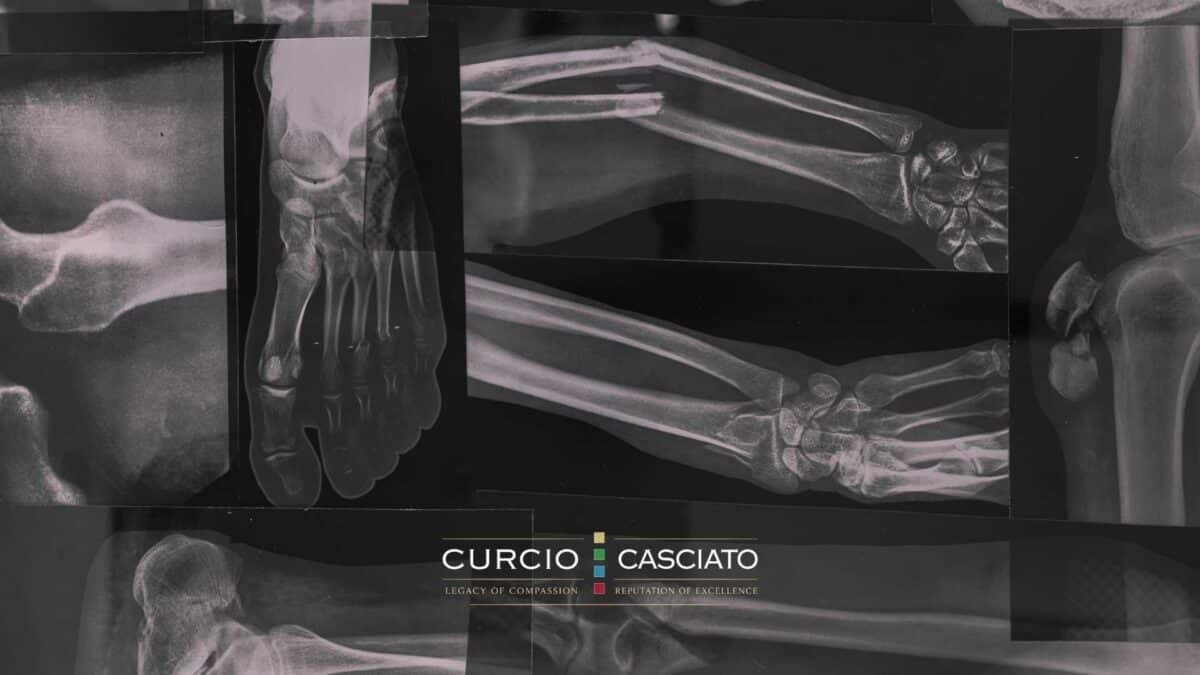
Broken bone injuries are the most common serious injuries, and medical expenses can be staggering. Minor breaks that heal with non-surgical treatments may cost a few hundred dollars. Complex fractures, or breaks requiring surgeries such as spinal fusions or hip replacements, can top $100,000 or more, before accounting for lost wages, physical therapy, and long-term care. According to the orthopedic registries, over 6 million fractures occur annually, each carrying a price tag that can define a family’s financial future. Here, we answer how much a broken bone costs with insurance and how much it costs without health insurance, specifically for Illinois residents. We also explain what Illinois victims can recover when injuries result from someone else’s negligence.
Contact a Chicago broken bone injury lawyer to schedule a free consultation. Call 312-321-1111.
How Much Does it Cost to Fix a Broken Bone?
The cost of a broken bone ranges from roughly $500–$3,000 for minor breaks that heal with non-surgical treatments to $35,000–$100,000+ for complex fractures requiring surgery, particularly for the femur, pelvis, spine, or hip. A simple casting is significantly cheaper than surgical repair with pins or plates. The two factors that drive the difference include the location and severity of the fracture, and whether your health insurance policy covers the broken bone injury.
The total cost of any break typically includes some combination of emergency room fees, imaging (X-ray, CT, or MRI), doctor’s fees, and medications. When a bone breaks and requires surgical intervention, add procedure costs, anesthesia, inpatient hospitalization, internal hardware (plates, screws, and rods), physical therapy, and follow-up care.
Healthcare costs in the Chicago area are generally 15–30% higher than national averages. The following are commonly broken bones and associated costs in Illinois:
| Surgical Treatment & Fracture Type | Est. Cost WITH Insurance Coverage (out-of-pocket unless noted otherwise) | Est. Cost WITHOUT Insurance | Key Variables |
|---|---|---|---|
| Simple fracture (non-surgical) | $150–$1,500 (copay/deductible) | $500–$3,000 | Emergency room visit + casting + 1–2 follow-up appointments |
| Wrist/radius fracture (surgical) | $500–$3,000 | $8,000–$25,000 | ORIF hardware, anesthesia |
| Ankle fracture (surgical) | $500–$3,500 | $10,000–$30,000 | Hardware, PT, boot/cast |
| Femur fracture surgery | $2,000–$6,000 | $35,000–$75,000+ | Intramedullary nail, ICU stay |
| Broken pelvis surgery | $3,000–$8,000 | $30,000–$90,000+ | Complex reconstruction, long hospitalization |
| Hip fracture/replacement | $2,000–$6,500 | $40,000–$80,000+ | HANA table, implants, PT |
| Broken rib (non-surgical) | $500–$2,000 | $3,000–$15,000 | Higher if complications (pneumothorax) |
| Spinal fracture: Kyphoplasty | $1,500–$4,000 | $15,000–$40,000 | Vertebroplasty alternative |
| Spinal fracture: Laminectomy | $2,000–$6,000 | $20,000–$60,000 | If nerve compression is present |
| Spinal fusion surgery | $5,000–$15,000+ | $50,000–$150,000+ | Most expensive; multilevel = higher |
| Facial/orbital fracture | $1,000–$4,000 | $8,000–$35,000 | Reconstructive surgery adds significant cost |
| Skull fracture | $3,000–$10,000 | $30,000–$100,000+ | Often requires neurosurgery + ICU |
*Estimated values only. Actual total costs vary based on the patient’s health insurance plan, provider, and other cost factors. You can use the CMS Medicare Fee Schedule and HCUP (hospital cost data) or contact our personal injury lawyers for more specific numbers.
How Much Does a Broken Bone Cost With Insurance?
Out-of-Pocket Costs
“Cost with insurance” means the patient’s actual out-of-pocket expenses after the responsible party’s insurance company pays its share: deductibles, copays, coinsurance, and out-of-pocket maximums. In Illinois, typically, patients with health insurance face:
Copayments for services can range from $20 to $50 for office visits or $250 to $545 for emergency room visits that are within the insurance network. Out-of-network providers can lead to significantly higher costs or no coverage at all.
Insurance plan’s deductible, which for most Illinois ACA marketplace individual plans runs $1,500–$5,000.
After the deductible is satisfied, coinsurance of 20–30% applies on the remaining balance until the out-of-pocket maximum is reached, capped at $9,450 for individual ACA plans in 2024.
For example, a $55,000 femur surgery typically leaves the responsible party owing roughly $7,000 total in direct medical expenses, though lost income and ongoing physical therapy are separate and entirely uncovered.
Important exceptions include providers that are outside of the insurance network, balance billing, and coverage gaps for items like durable medical equipment or home health aides. The Illinois Surprise Billing Protection Act shields patients from unexpected out-of-network charges for emergency room visits.
What Isn’t Covered By Health Insurance
Health insurance covers treatment and nothing else. The following are not covered by health insurance plans:
- Lost wages during treatment and recovery
- Non-medical expenses: transportation to appointments, home modifications for accessibility, childcare during recovery.
- Pain and suffering
- Long-term care or in-home nursing if required
Many insured patients injured by someone else’s negligence don’t realize that a broken bone injury claim can recover all of these categories, not just the portion of medical expenses that their insurance provider didn’t pay.
How Much Does a Broken Bone Cost Without Insurance?
Emergency Room Visits & Surgical Treatment
Patients without health insurance face chargemaster rates, which typically run 2–5 times what insurance companies negotiate. For example:
Simple wrist fracture without coverage: emergency room visit ($1,500–$3,500) + X-ray ($200–$600) + casting ($300–$800) + orthopedic follow-up appointment ($200–$500) = $2,200–$5,400 for a relatively minor break.
Femur fracture without insurance coverage: emergency room visit and ambulance ($1,200–$3,000), CT scan ($1,000–$5,000), surgical intervention ($25,000–$60,000), hospitalization for 3-7 days ($10,000–$30,000 per day), and physical therapy ($3,000–$10,000) can combine to reach $60,000–$150,000 or more.
According to the Illinois Department of Insurance, the state has over 800,000 residents without health insurance. Uninsured patients have options: under the Illinois Hospital Uncompensated Care program, nonprofit hospitals are required to offer charity care assistance, and most offer Medicaid eligibility screening and payment plan arrangements.
Urgent Care Broken Bone Cost
Urgent care centers are significantly more cost-effective than emergency departments for minor fractures in Illinois. An urgent care visit typically costs $150–$300 without coverage, compared to $1,500–$3,500 for the emergency room. The difference between an urgent care facility and an emergency room visit can reach thousands of dollars once ER facility fees, separate physician billing, and after-hours surcharges are factored in.
Most urgent care centers can perform X-rays and apply a splint or temporary cast before referring you to a specialist. With insurance, the copay for urgent care facility fees typically runs $20–$75, versus $250–$545 for an in-network ER visit. That said, urgent care visits aren’t appropriate for open fractures, suspected femur, pelvis, or spinal injuries, or any break accompanied by severe deformity, numbness, or vascular compromise. Those require immediate emergency room evaluation.
Medical Liens and Personal Injury Cases
For uninsured patients, medical liens are a critical option that most people never hear about until they speak with an attorney. Many providers, orthopedic surgeons, hospitals, and physical therapists will agree to treat now and defer payment until the case resolves.
This means an uninsured victim of a crash or construction accident in the Chicago area can receive full surgical care for a broken femur or spinal fracture without any upfront payment, provided an attorney negotiates a lien arrangement with the treating provider.
Our law firm has experience working with Illinois providers on these arrangements, so clients get the care they need while their case is pending.
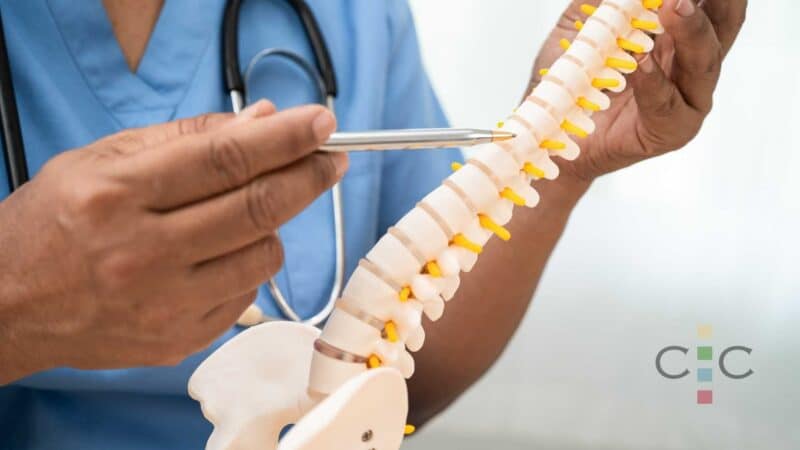
Common Types of Bone Breaks in Illinois
By displacement/structure:
- Simple fracture/closed fracture: doesn’t pierce the skin. Infection risk is low, and treatment often involves casting or splinting.
- Open fracture/compound fracture: pierces through the skin; highest infection risk. Compound fractures almost always require immediate surgical intervention.
- Displaced fracture: ends shift out of alignment. Displaced fractures typically require surgical reduction, using hardware such as plates, screws, or rods.
- Non-displaced fracture: bone cracks but stays aligned. Non-displaced fractures can usually be treated conservatively with a cast, splint, or brace.
- Stable fracture: ends are aligned and unlikely to shift during the healing process.
- Unstable fracture: fragments are likely to shift or displace further, even when the limb or spine is immobilized externally. This risk is driven by the pattern, the forces exerted on the bone, and the location, particularly at joints or in weight-bearing bones.
More severe fractures by specific pattern:
- Spiral fracture: twisting force resulting in a corkscrew pattern
- Comminuted fracture: bone shatters into three or more fragments
- Greenstick fracture: bone bends and partially breaks without snapping through; occurs only in children
- Buckle fracture (torus): bone compresses and buckles on one side; also pediatric
By mechanism:
- Stress fracture: hairline crack from repetitive overload rather than a single impact
- Pathological: occurs in those with weak bone density (osteoporosis, cancer, infection)
- Avulsion: a tendon or ligament pulls a bone fragment away from the main bone
- Compression: bone is crushed vertically; most common in vertebrae after falls or osteoporosis
Specific named types:
- Hairline fracture: thin crack, often a subset of stress fractures; may not show on initial X-ray
- Impacted fracture: broken ends are driven into each other; stable but requires monitoring
- Segmental: same bone broken in two separate places, creating a “floating” middle segment
Cost Factors for Commonly Broken Bones
Wrist Fracture Cost
Wrist fractures, typically distal radius fractures from falls, are one of the most commonly broken bones in the United States. Non-surgical treatment with casting costs $1,500–$4,000 without insurance and $200–$800 with health insurance coverage. Surgical repair using open reduction internal fixation (ORIF) runs $8,000–$25,000 without insurance, with physical therapy adding another $1,500–$5,000 over 10 to 20 sessions.
Our Chicago slip and fall attorneys can help you recover the full cost of wrist fracture treatment if someone else’s negligence contributed to your fall.
Ankle Fracture Cost
Surgical intervention for a bimalleolar or trimalleolar ankle fracture costs $1,000–$3,500 out-of-pocket with health insurance coverage and $10,000–$30,000 without it. Serious complications, like hardware removal and post-traumatic arthritis, can add $5,000–$20,000 in future expenses.
Locally, ankle fractures are common in pedestrian accidents and construction site falls. Our Chicago pedestrian accident lawyers have secured millions for victims.
Broken Collarbone Cost
Broken collarbones (clavicle fractures) managed with a sling and follow-up care typically cost $2,000–$8,000 without insurance. Displaced fractures requiring surgical intervention run $12,000–$22,000. These broken bone injuries are common in direct-impact falls, motorcycle, and bike accidents in Cook County. Our Chicago motorcycle accident attorneys handle these cases regularly.
Broken Arm Cost: Forearm / Humerus (Upper Arm)
When managed with a sling or splint, a broken arm costs $1,500–$5,000 without coverage. Surgical intervention (ORIF): $10,000–$30,000.
Humeral head fractures involving the shoulder joint can require partial or total shoulder replacement, which runs $25,000–$50,000 without insurance and represents a significantly longer recovery and rehabilitation course among victims with broken arms.
Foot & Toe Fracture Cost
Simple toe fractures requiring buddy taping and minimal intervention are relatively cost-effective, typically running $200–$1,000. A Jones fracture or complex metatarsal fracture requiring surgery runs $8,000–$18,000 without coverage. Foot and lower-extremity fractures from falling objects are among the most common injuries on Chicago construction sites, where workers may have third-party claims in addition to workers’ compensation. Our Chicago work accident attorneys can evaluate both avenues of recovery.
Facial / Orbital Fracture Cost
The initial diagnosis, CT scan, and emergency room consultation for a facial fracture cost $2,000–$8,000. Orbital floor repair runs $8,000–$35,000, and nasal or jaw reconstruction adds $5,000–$20,000 depending on severity. Locally, facial fractures are common in auto accidents and assaults. Injuries resulting from assaults on someone else’s property can support negligent security claims against property owners in Chicago.
Most Expensive Fracture Surgeries
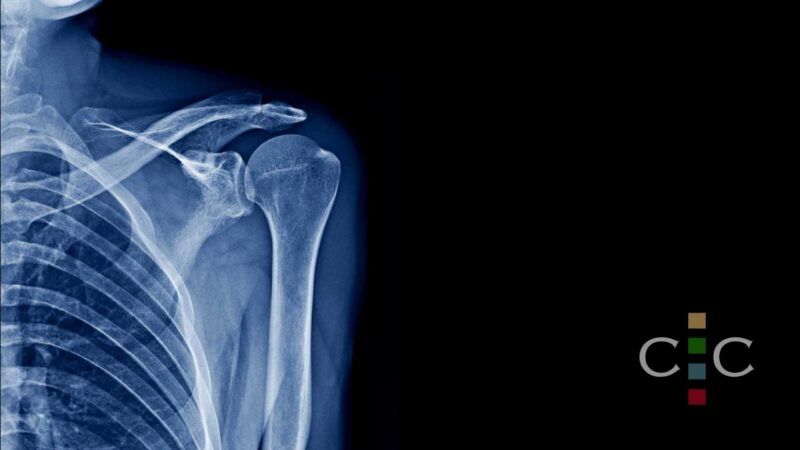
Femur Fracture Surgery Cost (Broken Leg)
Femurs are the longest, strongest bones in the body. When this bone breaks, it’s a major trauma event. In Illinois, broken legs are typically the result of auto accidents, pedestrian strikes, and construction falls.
Without health insurance, intramedullary nail fixation surgery alone costs $35,000–$75,000, a hospital stay of five to ten days adds $10,000–$40,000, and physical therapy contributes another $5,000–$15,000, for a total cost that frequently reaches $50,000–$130,000. With insurance and a met out-of-pocket maximum, most pay $2,000–$6,000. However, insurance providers don’t cover lost wages and long-term treatment costs.
Femoral neck fractures in the elderly often require partial or total hip replacement rather than fixation. In Illinois car and truck accident cases, broken legs consistently produce among the highest-value settlements and verdicts. Our Chicago car accident attorneys have obtained millions for Illinois victims. See our motor vehicle accident case results.
Spinal Fracture Surgery Costs: Laminectomy, Kyphoplasty & Spinal Fusion
Spinal fractures are among the most serious and generally bring the most financial stress for families. They often occur in auto accidents, construction falls, and nursing home falls in Cook County.
| Category | Without Insurance | With Insurance (est. out-of-pocket) | Notes |
|---|---|---|---|
| Kyphoplasty | $15,000–$40,000 per level | $1,500–$5,000 | Minimally invasive; 24–48 hr recovery |
| Laminectomy | $20,000–$60,000 | $2,000–$6,000 | Varies by the number of levels involved |
| Spinal fusion (1–2 levels) | $50,000–$150,000 | $5,000–$15,000 | Most common after burst/unstable fractures |
| Spinal fusion (multilevel) | $100,000–$300,000+ | $10,000–$15,000+ | Usually hits the annual OOP maximum |
| Inpatient hospitalization | $10,000–$30,000/day | $500–$2,000/day | 3–7 days average for fusion |
| Inpatient rehabilitation | $800–$2,000/day | $200–$600/day | 1–3 weeks typical post-fusion |
| Outpatient physical therapy | $8,000–$25,000 | $1,500–$5,000 | 30–60 sessions are common after fusion |
| Chronic pain management | $5,000–$20,000/year | $1,000–$4,000/year | Injections, medication, and pain specialist visits |
| Revision surgery | $75,000–$200,000+ | $5,000–$15,000+ | Adjacent segment disease, hardware failure |
| Long-term follow-up (first year) | $5,000–$15,000+ | $1,000–$3,000+ | Imaging, neurology, and orthopedic visits |
The North American Spine Society and peer-reviewed outcomes data on PubMed provide additional clinical context on these procedures.
Spinal fractures requiring surgery are high-value. They demand compensation for pain and suffering, lost earning capacity, and future treatment plans, which can push total damages well into seven figures for multilevel fusion cases. Spine injuries can also cause cauda equina syndrome, an emergency affecting bladder, bowel, and lower extremity function that generates catastrophic damage. Our Chicago spinal cord injury attorneys handle the full range of spinal trauma.
Broken Pelvis Surgery Cost
Stable pelvic fractures may heal without surgical intervention ($5,000–$20,000 in hospitalization costs); unstable fractures (pelvic ring) requiring open reduction internal fixation or external fixation cost $30,000–$90,000 without insurance. ICU admission adds $2,000–$10,000 per day. Total costs for a severe unstable fracture with surgery and a full hospital course frequently reach $75,000–$200,000.
Chronic pelvic pain, hip instability, and bladder, bowel, or sexual dysfunction are all compensable in personal injury lawsuits. Severe pelvic fractures causing nerve damage may also give rise to a claim handled by our Chicago paralysis injury attorneys.
Cost of a Broken Rib
Without complications, a single rib fracture costs $3,000–$15,000 without insurance and $500–$2,500 out-of-pocket. Multiple rib fractures, including flail chest, require ICU admission, mechanical ventilation, and extended hospitalization, pushing total costs to $20,000–$75,000 without insurance and $3,000–$8,000 at the out-of-pocket maximum.
Complications, like pneumothorax (collapsed lung requiring a chest tube), hemothorax, and pneumonia, add $5,000–$20,000 in additional treatment costs.
Surgical repair (ORIF) for severe flail chest costs $15,000–$40,000 without insurance. Multiple rib fractures from truck accidents are frequently treated at Level I trauma centers. Broken ribs can cause permanent breathing impairment and generate substantial pain and suffering damages. Contact our Chicago truck accident attorneys to explore your legal options.
Hip Replacement Surgery Cost / Hip Fracture Cost
Hip fractures are one of the leading causes of injury death in elderly patients and a high-impact injury in younger adults involved in serious accidents. Here are general examples of hip fracture costs in Illinois:
| Category | Uninsured | With Insurance (est. out-of-pocket) | Notes |
|---|---|---|---|
| Internal fixation (screws) | $18,000–$45,000 | $1,500–$4,000 | For non-displaced femoral neck fractures |
| Partial hip replacement) | $25,000–$55,000 | $2,000–$5,000 | Replaces the femoral head only |
| Total hip replacement | $40,000–$80,000+ | $2,000–$6,500 | Most common for displaced fractures |
| Revision hip replacement | $50,000–$100,000+ | $3,000–$8,000+ | Defective implants may support product liability claims |
| Inpatient rehabilitation (per day) | $800–$2,000/day | $200–$600/day | 1–3 weeks typical |
| Outpatient physical therapy | $3,000–$10,000 | $500–$2,500 | 20–40 sessions average |
| Home health aide | $20–$40/hour | $20–$40/hour | Not covered |
| Long-term follow-up (first year) | $5,000–$15,000+ | $1,000–$3,000+ | Hardware checks, imaging, pain management |
The American Association of Hip and Knee Surgeons provides resources on these procedures. When a hip injury results from a fall on commercial property, a Chicago premises liability attorney can potentially help you file a legal claim for total recovery.
Skull Fracture Cost
Skull fractures are life-threatening and require immediate trauma evaluation. Linear skull fractures managed without surgical intervention cost $15,000–$50,000. Depressed skull fractures requiring neurosurgery run $30,000–$120,000 or more without insurance. The most significant expense is often associated with costs for brain trauma. This is a separate, often far more expensive condition that dwarfs the treatment costs of skull fractures. Our Chicago traumatic brain injury attorneys understand the full medical and legal complexity of combined injuries.
Knee Fracture / Patella Fracture Cost
Surgical ORIF for a patella fracture costs $12,000–$30,000 without insurance. Tibial plateau fractures run $18,000–$50,000 surgically and carry a high risk of post-traumatic arthritis requiring eventual total knee replacement, which adds another $30,000–$55,000. Our Chicago knee injury attorney team handles both acute fracture claims and long-term consequences, including replacement procedures.
Can You Sue When A Bone Breaks in Illinois?
Yes, if the broken bone was caused by another person’s negligence in Illinois, you can file a personal injury lawsuit for damages. A personal injury lawyer can help you prove that the defendant owed you a duty of care, breached that duty, that the breach caused your fracture, and that you suffered damages as a result. Under the Illinois modified comparative fault rule, you can recover damages as long as you are less than 51% at fault for the accident, with your award reduced proportionally by your share of fault.
Workers injured on the job can pursue a separate third-party lawsuit against non-employer defendants. Illinois workers’ compensation benefits and personal injury lawsuits aren’t mutually exclusive.
The Illinois statute of limitations for most personal injury claims is two years from the date of injury. Exceptions apply for minors. Lawsuits against the CTA, Metra, or other government entities carry a one-year deadline.
Don’t wait; evidence degrades quickly. Our attorneys can file a spoliation letter in Cook County to help guarantee all evidence is secured before insurance company negotiations begin.
How Much is a Broken Bone Injury Case Worth in Illinois?
The value of broken bone settlements and verdicts in Illinois varies based on the bone fractured, whether you required surgery, how much work you missed, the permanency and severity of the fracture, and the responsible party’s insurance plan.
Cases involving multiple fractures with permanent disability regularly reach or exceed $1,000,000.
Illinois Supreme Court struck down noneconomic damage caps in Best v. Taylor Machine Works. This means victims can secure damages for severe pain and suffering. In addition to compensatory damages, punitive damages are also available for willful or wanton conduct, which is directly relevant in drunk driving, reckless commercial trucking, nursing home broken bone, and drunk driving accident claims in Chicago.
View our case results to see what we’ve helped victims obtain across Illinois.
When a broken bone results in death, our Chicago wrongful death attorneys can pursue a separate legal claim on behalf of the victim’s family.
Fracture Injury FAQs
How much does a broken bone cost in Illinois?
Broken bone costs in Illinois range from $500–$3,000 for a minor non-surgical fracture to $50,000–$150,000+ for major surgeries like femur fixation or spinal fusion. Chicago-area hospital costs are typically 15–30% above the national average. If someone else caused your injury, a personal injury attorney can help you recover these costs from the responsible party.
Does insurance cover broken bones?
Yes, health insurance covers broken bone treatment, but you will still owe deductibles and coinsurance, typically $1,500–$10,000 depending on your insurance plan. If someone else caused your fracture, their liability insurance, not your health insurance, should ultimately be responsible for your medical bills, and a lawsuit can recover far more than your out-of-pocket costs alone.
How much does femur fracture surgery cost?
Femur fracture surgery in Illinois costs $35,000–$75,000 without insurance. With health insurance, patients typically pay $2,000–$6,000 after meeting their deductible. When a car accident or another party’s negligence caused the fracture, medical costs, lost wages, and future care can all be recovered through a civil claim.
How much does spinal fusion surgery cost?
Spinal fusion surgery costs $50,000–$150,000 for a one- to two-level fusion without insurance, and $100,000–$300,000 or more for multilevel procedures. Chicago-area Level I trauma centers are among the highest-cost providers in Illinois. A spinal fusion resulting from an accident may support a seven-figure settlement.
Can I sue for a broken bone in Illinois?
Yes. If your broken bone was caused by another person’s negligence, in a car accident, slip and fall, construction accident, or any other preventable incident, you can sue for medical bills, lost wages, pain and suffering, and future medical care in Illinois. You generally have two years from the date of harm to file.
How much is a broken bone lawsuit worth in Illinois?
Minor fractures typically settle for $10,000–$50,000. Broken bones requiring surgery are worth $50,000–$500,000+. Severe fractures requiring spinal fusion, hip replacement, or pelvic reconstruction, with permanent impairment, can exceed $1,000,000. Illinois does not cap pain and suffering damages, making high-value recoveries fully available to injured victims.
What if I can’t afford broken bone surgery in Illinois?
If you are uninsured, the state of Illinois requires nonprofit hospitals to offer financial assistance programs. Additionally, personal injury attorneys can often arrange treatment on a medical lien, meaning you receive care now and the provider is paid from your settlement. This option is especially valuable for accident victims awaiting resolution of a liability claim and costs nothing upfront.
How much does hip replacement surgery cost in Illinois?
Total hip replacement in Illinois costs $40,000–$80,000 without insurance. With insurance, most patients pay $2,000–$6,500. Rehabilitation, home care, and long-term follow-up can add $10,000–$30,000. Nursing home falls may support a claim in addition to recovering all related medical costs.
How much does kyphoplasty cost?
Kyphoplasty, a minimally invasive procedure to stabilize a compressed vertebra, costs $15,000–$40,000 per vertebral level without insurance in Illinois. With insurance, patients typically pay $1,500–$5,000. Kyphoplasty is commonly required after vertebral compression fractures from car accidents and falls, and may be recoverable in a settlement or verdict.
Why Choose Curcio & Casciato for Your Illinois Broken Bone Claim
So, why hire Curcio & Casciato? With over 65 years of experience, we’re one of Chicago’s longest-standing personal injury firms. The firm has deep experience in catastrophic fracture claims involving femur fractures, spinal fusion surgery, hip replacements, pelvic fractures, and other serious broken bone injuries across Illinois.
There is no fee unless we recover compensation for you. We offer free consultations. Learn more about our firm, then call 312-321-1111 or get your free case evaluation online.