
Chicago OBGYN Malpractice Attorneys
PRACTICE AREAS
The Chicago OBGYN malpractice attorneys at Curcio & Casciato hold negligent doctors and hospitals accountable when pregnancy, labor and delivery, or postpartum care goes wrong. As a Chicago maternal injuries attorney team, we seek maximum compensation for mothers harmed and family members of mothers killed by obstetric medical negligence across Cook County. Our law firm works on a contingency fee basis, so you pay nothing unless we win.
To schedule a free consultation, call 312-321-1111 or speak to an OB-GYN malpractice lawyer online.
To learn more, use the buttons to jump ahead.
What Counts as OB-GYN Malpractice in Illinois?
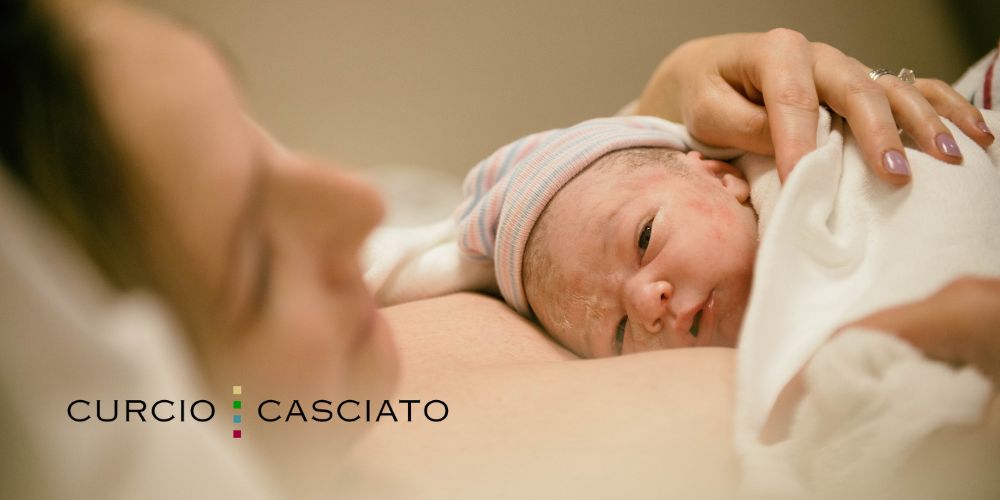
OB-GYN malpractice happens when an obstetrician, gynecologist, nurse, or hospital fails to meet the accepted medical standard of care during pregnancy, labor, delivery, or the postpartum period, and that failure injures or kills a mother. A difficult outcome by itself is not malpractice. Childbirth carries real risk even with excellent care.
What turns a bad outcome into a valid claim is negligence plus causation. Our Chicago OBGYN malpractice attorneys must show that a competent provider would have acted differently and that the substandard care directly caused the harm. Our Chicago medical malpractice attorneys build that proof with records and independent expert review.
To bring a successful OB-GYN malpractice claim in Illinois, four elements must be established:
- A provider-patient relationship existed, creating a duty of care
- The provider breached the accepted medical standard of care
- That breach directly caused the injury or death
- The injury produced real damages, such as medical costs, lost income, pain, or loss of life
Chicago Maternal Death Cases: Preventable Causes & Hospital Negligence
The most devastating OB-GYN cases involve mothers who don’t survive pregnancy or childbirth. Our Chicago maternal death attorneys understand that in so many cases, these medical mistakes could have been prevented. CDC reports show roughly 87% of maternal deaths are preventable. State figures tell the same story.
According to the Illinois Department of Public Health (IDPH), 91% of pregnancy-related deaths are potentially preventable. Committees reviewing this repeatedly report that the most common reasons stem from failure to deliver a timely standard of care. The “lack of time” leads to careless medical negligence, such as wrong-patient orders in obstetrics units.
Behind that number are families who trusted a healthcare provider and were failed.
Most maternal deaths trace to a handful of conditions that demand immediate recognition and treatment. The most common preventable causes of maternal death in Chicago include:
- Uncontrolled postpartum hemorrhage
- Severe preeclampsia, eclampsia, and HELLP syndrome
- Sepsis from chorioamnionitis or postpartum infection
- Amniotic fluid embolism and pulmonary embolism
- Delayed emergency response to a deteriorating mother
When a mother dies from any of these, our Chicago wrongful death attorneys investigate whether the hospital or its staff ignored the patient’s concerns, symptoms, or protocols.
When Do Most Maternal Deaths Occur?
Most maternal deaths occur:
- During pregnancy: less than 33%
- Immediate postpartum (1-30 days): 43%
- Late postpartum (2-12 months): 33%
Leading Clinical Causes of Maternal Death & Injury
- Substance use and mental health: Accounts for 33% of maternal deaths, often during the postpartum period
- Blood clots (embolisms) cause 12% of maternal deaths, often from failure to implement adequate DVT protocols
- Postpartum hemorrhage: Uncontrolled bleeding causes 10% of maternal deaths. The most common reason was delayed reaction times.
Maternal Mortality in Cook County: Understaffing & Corporate Negligence
Medical mistakes by individual obstetrician-gynecologists are only part of why maternal injuries and maternal deaths occur. The Illinois maternal mortality rate reflects systemic failures inside the institutions responsible for care.
When hospitals understaff labor and delivery units, healthcare providers are more likely to miss warning signs and ignore patient concerns. That is a corporate negligence theory that our Chicago hospital negligence lawyers pursue directly against the facility.
Discrimination-Related Maternal Death in Chicago
Additionally, IDPH also reports that Black Illinoisans had the highest maternal mortality rate at 78 deaths per 100,000 live births; they’re three times more likely to die and twice as likely to suffer serious injuries than white women. Discrimination was a contributing factor in 74% of Black pregnancy-related deaths.

Types of OB-GYN Medical Malpractice Cases Causing Maternal Injuries in Chicago
Around 700 women die from pregnancy complications annually in the U.S. In 2012, the country’s birth trauma rate was 1.9 per 1,000 live births. Now, the birth trauma rate is 1.5 per 1,000 live births. The decrease is largely due to decreased use of vacuum extractors and forceps.
Most personal injuries involving mothers are caused by preventable errors during pregnancy, labor, and delivery. When healthcare providers miss warning signs, delay treatment, or mishandle a procedure, mothers can suffer catastrophic harm. As a Chicago maternal injury lawyer team, we help determine the cause and responsibility.
The following are examples of OB-GYN malpractice that can occur at various stages. We break down the other common maternal injuries below.
| OB-GYN Error | Failure To | Potential Harm |
|---|---|---|
| Stroke During Pregnancy, Labor, or Postpartum |
|
|
| Missed Fetal Distress |
|
|
Some of these OB-GYN mistakes harm the baby as well as the mom. The most common examples are medication errors and untreated distress patterns that result in oxygen deprivation for the infant. The result can include conditions like cerebral palsy, which our Chicago birth injury attorneys also pursue in conjunction with the maternal injury claim.
Chicago Prenatal Care Malpractice
| OB-GYN Error | Failure To | Potential Injury |
|---|---|---|
| Preeclampsia / Eclampsia |
|
|
| Missed Fetal Growth Restriction |
|
|
| Placenta Previa |
|
|
| Placental Abruption |
|
|
| Chorioamnionitis |
|
|
| Gestational Diabetes or Other Mismanaged High-Risk Pregnancy |
|
|
Prenatal care malpractice cases we also handle include:
- Delayed treatment of miscarriage or D&C errors, which our Chicago surgical error lawyers handle
- Pregnancy-related stroke warning signs ignored, often a medical misdiagnosis our team investigates
Placenta, Labor and Delivery Complications
| OB-GYN Error | Malpractice / Failure To | Potential Result |
|---|---|---|
| Placenta Accreta Syndrome |
|
|
| Placenta Delivery Complications |
|
|
| Uterine Rupture |
|
|
| Uterine Inversion After Delivery |
|
|
| Delayed C-Section |
|
|
| C-Section Surgical Errors |
|
|
| Pitocin and Anesthesia Errors |
|
|
Vagnial & Pelvic Injuries
| OB-GYN Error | Negligence / Failure To | Potential Result |
|---|---|---|
| Severe Vaginal Tears |
|
|
| Episiotomy Injuries |
|
|
| Pelvic Floor Damage |
|
|
| Coccyx or Pelvic Fracture |
|
|
| Pubic Symphysis Separation |
|
|
| Pelvic Organ Prolapse or Prolapsed Uterus |
|
|
| Descending Perineum Syndrome |
|
|
Maternal Hemorrhage & Postpartum Malpractice
| OB-GYN Error | Failure To | Potential Result |
|---|---|---|
| Postpartum Hemorrhage (PPH) |
|
|
| Hemorrhagic Shock |
|
|
| Postpartum Infection & Sepsis |
|
|
| Postpartum Preeclampsia |
|
|
| Postpartum Cardiomyopathy |
|
|
Maternal Blood Clots & Embolisms
| OB-GYN Error | Failure To | Potential Harm |
|---|---|---|
| Amniotic Fluid Embolism or Pulmonary Embolism |
|
|
| DVT |
|
|
D&C/Miscarriage Negligence
| Subtype | Malpractice | Potential Harm |
|---|---|---|
| Failure to Perform D&C |
|
|
| D&C Surgery Errors |
|
|
| Ectopic Pregnancy |
|
|
| Internal Rupture |
|
|
| Incomplete Miscarriage |
|
|
Gynecologist Malpractice & Fertility Fraud
| Case Type | Medical Negligence & Failure To | Potential Resulting Injury |
|---|---|---|
| Hysterectomy Errors |
|
|
| Ovarian Cysts & Cervical Cancer |
|
|
| Endometriosis |
|
|
| Fertility Fraud |
|
|
Compensation for Chicago OB-GYN Malpractice Victims
OB-GYN malpractice reshapes a family’s life, finances, and future. Illinois law lets injured mothers and grieving families recover economic and non-economic damages. Our Chicago OBGYN malpractice attorneys fight to recover maximum compensation. We present some of our results from our medical malpractice verdicts.
Victims may recover the following in an OB-GYN malpractice case:
- Past and future medical expenses
- Lost income and future earning capacity
- Long-term care and rehabilitation costs
- Pain, suffering, and disfigurement
- Loss of a normal life
- In maternal death cases, funeral and burial expenses, loss of companionship and support, and the family’s grief and mental anguish
No fee unless we win. Your consultation is free, and we handle OB-GYN malpractice cases on a contingency fee basis. You pay nothing up front, and we only collect a fee if we recover for you. Call (312) 321-1111.
Damages When OB-GYN Negligence Causes a Mother’s Death
Our Chicago maternal death attorney team uses two state laws to help ensure health-care providers are held liable: survival action and wrongful death claims.
- Wrongful death lawsuits: compensate surviving family members for their own losses, including companionship, childcare, and financial support, and the results we have obtained are reflected in our wrongful death verdicts.
- Illinois Survival Act: allows the estate to recover for what the mother suffered before she died, including pain and suffering and medical expenses.
Pursued together, survival action and maternal death cases recognize both the family’s loss and the mother’s suffering.
Areas We Serve: Cook County Maternal Birth Injury Cases
Our law firm serves clients across Cook County from our office in the heart of downtown at 161 N. Clark Street, minutes from the Circuit Court of Cook County and the Richard J. Daley Center. As a Chicago maternal injuries attorney team, we bring extensive experience and local knowledge to every maternal birth injury and maternal death claim we handle. We know the court’s civil division, its judges, and its filing procedures, which lets us move a case forward efficiently and avoid the procedural missteps that can derail a valid claim.
Our OBGYN malpractice attorneys regularly investigate care provided at the region’s major labor and delivery facilities, including Northwestern Memorial Hospital, University of Chicago Medical Center, Rush University Medical Center, UI Health, and John H. Stroger Jr. Hospital of Cook County.
If you suspect your injuries or a maternal death occurred due to medical malpractice at one of these facilities or anywhere throughout Cook County, our lawyers can review what happened.
Deadline for Filing a Maternal Birth Injury Claim or Maternal Death Claim in Illinois
The Illinois medical malpractice statute of limitations generally involves a two-year discovery period, paired with a four-year statute of repose. However, under Illinois law, victims must file an Affidavit of Merit before filing a medical malpractice lawsuit. This means the deadline arrives earlier than that two-year figure suggests.
Claim Type | Deadline |
|---|---|
Adult maternal injury malpractice, discovery rule | 2 years from discovery, but no more than 4 after the negligent act or omission |
Minor child, filing on behalf of a parent | Up to 8 years, never past the 22nd birthday |
Fraudulent concealment | 5 years from discovery |
Maternal death | 2 years from date of wrongful death |
The primary two-year statute of limitations comes from 735 ILCS 5/13-212. A Chicago OB-GYN negligence lawyer can determine the correct filing date. For an online walkthrough on the process, read our guide on how to sue an Illinois hospital for negligence.
How Our Chicago Maternal Injuries Attorney & Chicago Maternal Death Lawyer Team Proves OB-GYN Negligence
Winning a medical malpractice claim for a mother’s injury or maternal death comes down to evidence. Both maternal injury and maternal death cases turn on the medical record and opinions of medical expert witnesses who explain where medical mistakes occurred and where the health-care provider’s failure to uphold their legal duty caused the harm.
Our Chicago OB-GYN malpractice lawyer team gathers the following evidence and more:
- Prenatal, labor, delivery, and postpartum medical records
- Fetal monitoring strips and nursing notes
- Staffing records and internal protocols
- Independent review by a board-certified OB-GYN or maternal-fetal medicine specialist
- Billing records that establish the physician-patient relationship
If you suspect OB-GYN malpractice, a few steps protect your rights:
- Request complete copies of all medical records
- Write down your timeline of symptoms and how providers responded
- Don’t sign anything from the hospital, physician, or their insurer
- Don’t delay; missing the statute of limitations can bar valid claims
- Contact a Chicago OB-GYN malpractice attorney for a free consultation
Our Chicago maternal injury and maternal death lawyers handle all record requests, hiring medical experts, filing times, negotiations, and legal processes so you can focus on healing.
Why Families Choose Our Chicago Maternal Birth Injury Lawyers
Medical malpractice lawsuits against obstetricians are some of the most complicated cases in personal injury law. The mother’s injury or maternal death completely turns over the family’s life, but when there are serious problems from medical mistakes, family members are pitted against well-funded defense teams that protect them, demanding detailed proof.
It’s important for victims to understand that specialized medical malpractice experience is crucial for lawyers handling OB-GYN cases in Cook County. Both obstetric and gynecological cases involve highly technical medical standards of care. Our maternal injury and maternal death lawyers in Chicago have longstanding relationships with local medical experts. We also have the financial resources to ensure healthcare organizations face full responsibility, whether through negotiating or taking cases to court.
Our Chicago OB-GYN malpractice lawyers have proven success in both negotiating fair settlements and litigating against major healthcare providers across Illinois. This matters for clients because:
- A lawyer prepared for trial can often improve settlement offers.
- A track record of courtroom success can influence settlement offers in medical malpractice cases.
You can meet our Chicago trial attorneys and see the backgrounds we bring to both birth injury claims and wrongful death claims.
Prior medical malpractice settlements and verdicts include:
- $7.4 million settlement for delayed diagnosis
- $5.6 million settlement for surgical error
- $5 million medication error settlement
- $5 million settlement for a birth injury case
Negligent obstetrician-gynecologists often attempt to shift liability to the mother, arguing she failed to report symptoms, gaslighting family members into believing the mother’s complications were unavoidable. While medical malpractice claims can require extensive review of medical records and expert testimonies, defendants try to make this process seem more complicated than it truly is. Our Chicago maternal injury lawyers have extensive experience, hire the best medical expert witnesses, and know what to expect in negotiations and court. We have a decades-long reputation that can’t be bought.
Cook County families choose our law firm for our legacy of compassion and reputation for excellence. We treat every client with dignity while pursuing the justice and financial compensation they deserve.
Chicago OB-GYN Malpractice FAQs

What is OB-GYN malpractice?
OB-GYN malpractice is a healthcare provider’s failure to meet the accepted medical standard of care in terms of prenatal care, during labor and delivery, or postpartum care that results in a mother’s injury or a maternal death. Medical malpractice cases must show a legal duty of care, a breach of the standard of care, proof that the medical negligence caused the harm, and real damages.
How much is an OB-GYN malpractice case worth in Illinois?
The value of an OB-GYN malpractice case varies depending on the severity and the resulting effects. In many cases, settlements or jury awards are driven by:
- The extent and permanence of the personal injury
- Total medical costs, current and future
- Lost wages and future earning capacity
- Pain and suffering
- Loss of household maintenance and childcare
- Whether a maternal death occurred from medical negligence
How long do I have to file an OB-GYN malpractice lawsuit in Illinois?
Generally, patients and surviving family members have two years from when the harm was discovered. Key statute of limitations times include:
- Adult claims: 2 years from the date of injury discovery or wrongful death; absolute 4-year cutoff for personal injuries
- Minors: up to 8 years, but never past the 22nd birthday
Do I have a case if I was harmed but my baby was not?
Yes, mothers are actually the primary patient, not the baby. So you can file a medical malpractice lawsuit against an OB-GYN even if your baby is perfectly healthy. The most common examples of valid maternal injury claims include postpartum hemorrhage, organ damage, fistulas, or strokes caused by negligent care.
If you’ve suffered serious injuries, please don’t let a healthcare provider gaslight you into believing that your harm isn’t actionable because your baby is fine. That’s not how their legal duty works whatsoever.
Can I sue for a mother's death during or after childbirth?
Yes, surviving family members can file a wrongful death claim for their own recovery and a survival action for the mother’s pre-death suffering. In Illinois, a wrongful death lawsuit generally must be filed within two years of the date of death. However, there are exceptions for minor children filing on behalf of a deceased parent in limited situations.
When should I hire a Chicago maternal death attorney?
If you suspect a maternal death occurred from medical negligence, contact a lawyer immediately. Early involvement lets a Chicago maternal death lawyer preserve medical records and secure medical expert witnesses needed for negotiations or litigation. Evidence can disappear, and the statute of limitations is strict, so contacting a lawyer quickly protects your ability to recover.
What does it cost to hire a Chicago OB-GYN malpractice attorney?
Nothing up front. Our lawyers handle these medical malpractice cases on a contingency fee basis. You only pay a fee if we recover financial compensation on your behalf.
For a free consultation, call 312-321-1111 or contact an OB-GYN malpractice lawyer online.