
Playground Injury Attorney Chicago
Home » Practice Areas » Chicago Personal Injury Lawyer » Child Injury » Playground
PRACTICE AREAS
Our Chicago playground injury attorney team represents parents of children harmed on dangerous jungle gyms and playgrounds throughout Cook County. With over 65 years of combined experience and millions of dollars recovered for families in child injury claims in Chicago, we understand the toll playground accidents take on families. We handle the full range of playground injury claims, including premises liability, faulty equipment, negligent supervision, and government tort claims against schools and park districts. Our Chicago playground accident lawyers fight to hold negligent property owners, manufacturers, and caregivers accountable.
Call 312-321-1111 or contact Curcio & Casciato online for a free consultation. We handle claims on a contingency fee basis, so you pay nothing unless we win.
Why Families Need a Lawyer for Playground-Related Injuries in Chicago, IL
- Playground accidents account for 32.6% of all incidents in elementary school settings.
- Playground equipment accounts for 5.1% of all Illinois emergency room visits among children under 5.
- School-age children suffer injuries more often on public playground equipment than they do at home.
- 70% of fatalities happen on residential playground equipment, with over 50% caused by strangulation and 20% resulting from falls.
- NPPS assessments scored Chicago playgrounds at 70%, the lowest threshold for a “passing grade.”
Most Common Causes of Playground Accidents in Chicago
The most common causes of playground accidents in Chicago involve one of the following:
- Strangulation (56% of deaths): Most often occurs when a child’s clothing gets snagged in a gap or entangled with a rope.
- Falls (20% of deaths): Most Chicago fall accident claims result from jungle gyms, climbers, and slides without guardrails or inadequate impact-absorbing surfacing. Younger children don’t have very good upper arm strength. When they feel like they’re falling, they naturally protect themselves using outstretched hands, often causing broken bones in playground accidents.
- Impact & Tip-over: Often occur on merry-go-rounds or swing sets that aren’t properly anchored down.
Dangerous Playground Equipment in Chicago
Chicago playground accidents often stem from three types of playground equipment:
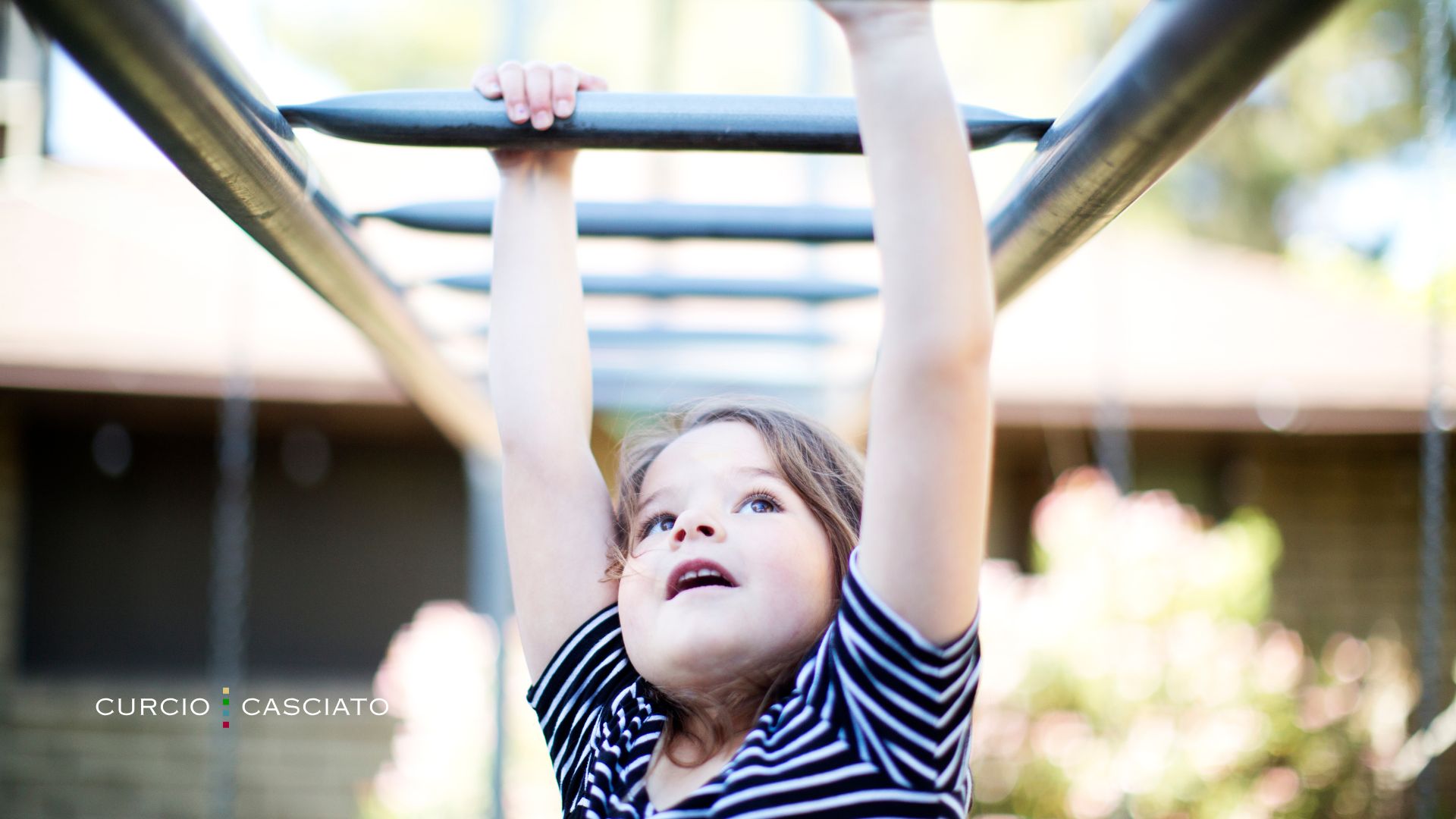
- Monkey Bars: Responsible for the highest percentage of serious injuries in public playground accidents (~36–53%). These are often associated with fractures from falls.
- Swings: A common cause of residential playground accidents (~67%).
- Slides: Account for ~21% of serious playground accidents.
The Consumer Product Safety Commission (CPSC) flagged specific playground equipment configurations for posing serious danger to children.
- Animal-Head Swings: Many have been removed from public spaces after hazard reports.
- Glider Swings: Designed for multiple kids, posing crush and impact risks.
- Trampolines: A significant source of fatal falls and spine injuries in Chicago.
- Rope Swings & Free Ropes: Frequently involved in strangulation deaths.
Adhering to the CPSC Handbook for Public Playground Safety and the Home Playground Safety Handbook specifications is crucial for serious playground accident prevention.
Monkey Bar Accidents
Monkey bar accidents, along with similar climbing structures like rock climbing walls, dome climbers, angled ladders, and boulder structures, cause 36–53% of all severe injuries. This is the single most dangerous playground equipment category.
The most common injuries from monkey bars include: wrist and forearm fractures, elbow fractures, concussions from falls, and shoulder dislocations.
Monkey bars are found at almost every Chicago Park District playground, school, child care center, and suburban park. Notable Illinois cases include:
- T.G. v. Chicago Public Schools (2018): The school’s actions actively made the victim’s condition worse.
- Chicago Park District Settlement (2021): $100,000 settlement negotiated for serious injuries from a jagged metal pipe.
If your child was injured on monkey bars, contact a Chicago playground accident lawyer. We’ll help determine if filing a Chicago fracture injury claim is appropriate and who bears the responsibility of covering treatment.
Swing Accidents
Swings cause ~28% of playground accidents in Chicago. Common causes of these playground accidents include: children walking in front of swings, falls, chain breaks, strangulation, seat detachment, crossbar collapse, and clothing caught in hooks or chains.
If your child suffered injuries, contact a Chicago playground accident attorney to explore your legal options.
Accidents on Slides
Slides cause ~21% of playground accidents in Chicago. Metal slides are known for causing severe contact burns in seconds, something most kids never consider. If your child was harmed because of this, our legal team can help file a lawsuit for burn injuries in Chicago.
Another common slide accident is falling onto hard surfaces, like concrete. Illinois law requires a minimum of 6 feet of impact-absorbing surface around slides, serving as a fall zone.
Additionally, design defects, such as protruding bolts or slide hardware, can cause strangulation deaths when they catch loose clothing.
Merry-Go-Rounds & Spinning Equipment Accidents
In December 2024, BCI Burke recalled 415 Inclusive Orbit merry-go-rounds due to a crush hazard. The merry-go-rounds were sold to municipalities, schools, and churches.
However, merry-go-rounds and similar structures are hazardous to many children in other ways. Kids are thrown, get arms or legs caught in handrails, or collide with others.
A playground injury attorney in Chicago can help ensure the responsible party is held liable. If your child was hurt on a merry-go-round, filing a product liability claim in Chicago can help you recover compensation for treatment costs and other damages.
Outdated Seesaws & Teeter-Totters in Chicago Playgrounds
An older CPSC dataset shows that seesaws and teeter-totters historically accounted for 67% of all playground equipment-related accidents. While these figures have now declined, many Chicagoland playgrounds still have older, more dangerous equipment.
Older design/manufacturing defects feature hard metal seats and exposed mechanisms. Kids fall from significant heights, experience sudden impacts, or have arms or legs pinched or crushed by moving parts.
Seesaws and teeter-totters are inherently faulty equipment, relying on the coordination of younger children using them. Despite the known design defects, many districts haven’t updated playground equipment.
If a younger child suffers injuries, a Chicago playground injury attorney can help ensure that the right parties are held liable for design defects and for failing to address justifiable safety concerns.
Composite Play Structure, Zip Line, and Jungle Gym Accidents
Composite structures, which combine climbers and slides, are common in Chicago parks following the Chicago Plays! renovation program. However, they pose entrapment hazards, especially if their opening aren’t under 3.5″ or over 9″, as required in Illinois.
Another common feature of Chicago parks is zip lines. The Consumer Product Safety Commission (CPSC) has linked zip lines to many children’s strangulation and fall deaths due to failures in the cable, seat, or attachment points.
If improperly maintained, as composite structures and jungle gyms age, they pose additional risks to kids. This can include sharp edges, protruding bolts, and broken connectors. If your child was harmed on poorly maintained equipment, our Chicago playground accident attorneys can help seek compensation.
Where Playground Injuries Happen — High-Risk Locations in Chicago & Cook County
Chicago Park District Playgrounds
The Chicago Park District manages 600+ parks with approximately 500 playgrounds. The Chicago Plays! Program replaced aging playground equipment at over 325 areas. However, many structures are now 10 years old and have been improperly maintained.
Lurie Children’s Hospital study found the most common dangers at CPD playgrounds were inadequate impact-absorbing surfaces (wood chip depth <9-12″), hard surfaces like exposed concrete, and hazards in fall zones.
Chicago park district playgrounds with aging playground equipment include:
- Washington Park (South Side)
- Garfield Park (West Side)
- Humboldt Park (West Side)
- Douglas Park (Lawndale)
- Jackson Park (South Shore/Woodlawn)
- Marquette Park (Chicago Lawn/West Englewood)
- Lincoln Park (North Side)
- Grant Park / Maggie Daley Park (Loop)
Cook County Daycare Playground Accidents
Daycare playground accidents are a major safety concern for parents in Cook County. Common causes of daycare playground injuries include falls, unsafe toys or defective equipment, lack of supervision, and choking hazards. Illinois child care centers must meet state regulations for protecting younger children. If the owners or management fail to do so, they can be held liable for broken bones or other serious injuries.
If your child suffered injuries in a Cook County daycare accident, we can help you seek compensation. Our Chicago playground accident lawyer team is experienced at navigating claims involving negligent supervision, manufacturing defects, and other common causes.
Cook County School Playground Accidents
Cook County school playground accidents are another common concern. They’re a leading cause of childhood injuries throughout Illinois, with thousands of kids treated for playground-related injuries annually.
Falls are the most common cause of playground injuries in Cook County, accounting for 44% of incidents. These playground accidents often lead to broken bones in the wrists, arms, elbows, and forearms, and younger children naturally protect themselves with their hands to break falls.
Our law firm handles both claims against private and public schools in Cook County. Filing lawsuits against public schools is more complex due to Illinois immunity standards. To sue, parents must show that the school’s conduct was “willful and wanton” to hold the school responsible. This standard is much lower for private school playground accident cases.
When faulty equipment, unsafe structures, or poorly maintained equipment aren’t addressed, or staff are negligent in treating kids, parents can seek compensation through playground accident claims.
Suburban Park District Playgrounds
Suburban park districts, including Skokie, Schaumburg, Orland Park, Palatine, Des Plaines, Oak Lawn, Tinley Park, and many others, independently manage hundreds of playgrounds. The Forest Preserve District of Cook County is also responsible for several areas with play areas.
Many of these areas have purchased recalled equipment. Regardless of the park district, Illinois property owners must take reasonable steps to protect kids. If playgrounds are improperly maintained or parents’ concerns are ignored, they bear responsibility for covering the child’s treatments and the parents’ losses.
Playground Accidents on Private Property – Apartment Complexes, HOAs, Churches & Businesses
Many Cook County playground accidents occur in apartment complexes, condominium HOAs, churches, restaurants with play areas, and indoor play centers. Parents have taken many children to exercise or have fun at chains like McDonald’s PlayPlaces and Chick-fil-A locations.
Indoor play centers and trampoline parks, such as those in Rosemont, Schaumburg, and Orland Park, also pose serious injury risks in improperly maintained or unsupervised areas.
Property owners, indoor playground owners, HOAs, and business operators have a duty to regularly inspect and maintain play areas, ensure safe surfacing, and promptly address hazards. When they fail to do so, and a child is injured, a Chicago playground injury lawyer can help pursue compensation for broken bones or other childhood injuries under Illinois law.
Who Is Responsible for a Playground Injury in Cook County?
Determining liability in a playground accident case depends on where the harm occurred and what caused it. In Cook County, multiple parties may be held accountable:
- City of Chicago / Chicago Park District: responsible for injuries at any of the 600+ CPD parks
- Suburban municipalities and park districts: Skokie, Evanston, Schaumburg, Orland Park, Palatine, and others manage their own facilities
- Forest Preserve District of Cook County: oversees recreational areas under county jurisdiction
- School districts: CPS and suburban districts may be liable
- Daycare centers and childcare facilities: standard negligence applies to private operators
- Faulty equipment manufacturers: strict product liability applies for design defects, warning defects, or manufacturing defects in Illinois
- Property owners, HOAs, and landlords: condo associations, church properties, indoor playground owners/operators, landlord and apartment complex liability in Cook County
- Maintenance contractors: third-party companies hired to inspect or repair playground equipment
Illinois Playground Safety Laws and the Attractive Nuisance Doctrine
- Illinois Premises Liability Act: requires property owners to keep play areas safe
- Illinois’s “open and obvious” doctrine is limited when children are injured. They don’t understand the dangers underscored in the typical Illinois reasonable person standard.
- Attractive nuisance doctrine in Illinois: property owners may be liable for injuries to trespassing children drawn to hazards like playground equipment.
What to Do After Your Child Is Injured on a Playground in Chicago
- Get them treated immediately. Go to the emergency room even if it doesn’t seem like a severe injury.
- Report the incident to the property owner, school, daycare, park supervisor, or park district. Request a written incident report.
- Photograph/video: the equipment, the hazard, the fall surface, the surrounding area, and your child’s injuries
- Collect witness contact info
- Preserve clothing and evidence
- Do NOT give recorded statements to insurers without contacting our Chicago playground injury attorneys.
How Curcio & Casciato Helps Families Seek Compensation For Playground Injuries in Cook County
- Investigating the scene: equipment inspection, maintenance record subpoenas, FOIA requests to park districts and school boards
- Identifying every responsible party: manufacturer, property owner, maintenance contractor, supervisor
- Consulting with playground safety experts (Certified Playground Safety Inspectors — CPSIs), medical professionals, and biomechanical engineers
- Communicating with insurers and government tort immunity units
- Filing claims in the appropriate Cook County courthouse (Daley Center, Skokie, Rolling Meadows, Maywood, or Bridgeview)
- Pursuing maximum compensation through insurance negotiation or jury trial
- Clients pay nothing unless we recover compensation
Our Chicago playground accident lawyers have a proven track record of success in securing premises liability settlements and verdicts.
Serving Playground Injury Victims Across Chicago, Cook County & Illinois
Curcio & Casciato represents families across all 77 Chicago community areas and every Cook County suburb. If your child was hurt on a dangerous playground, we're here to help.
Englewood, Auburn Gresham, Chatham, South Shore, Pullman, Roseland, Washington Park
Austin, Garfield Park, Humboldt Park, Lawndale
Lincoln Park, Rogers Park, Uptown, Albany Park, Logan Square
South Loop, Pilsen, Bridgeport, Back of the Yards, Brighton Park
Skokie, Evanston, Des Plaines, Niles, Glenview, Morton Grove, Northbrook, Arlington Heights, Palatine, Schaumburg, Wheeling
Cicero, Berwyn, Oak Park, Maywood, La Grange, Brookfield, Riverside, Western Springs
Orland Park, Tinley Park, Oak Lawn, Evergreen Park, Bridgeview, Alsip, Oak Forest, Calumet City, Harvey, Dolton
Naperville, Wheaton, Elmhurst, Aurora
Waukegan, Deerfield, Highland Park
Joliet, Bolingbrook, Plainfield
Elgin, St. Charles
Playground injury anywhere in Illinois? Get a free case review today.
(312) 321-1111 — Free ConsultationFAQ: Chicago Playground Injury Cases
Can I sue the City of Chicago if my child was injured at a Chicago Park District playground?
Yes, but claims against the Chicago Park District are subject to special rules under Illinois law. Plaintiffs must prove unsafe conditions were known and ignored. Strict deadlines and procedures also apply.
Can I sue if my child was hurt on a school playground in Cook County?
Yes. You may have a claim. If a public school is responsible, stricter rules apply, and you typically must prove the school knew about a dangerous condition and failed to address it. If it’s a private school or daycare, you can usually pursue a claim based on unsafe conditions, manufacturing defects, or inadequate supervision. Deadlines may be shorter in cases involving public entities, so it’s important to act quickly.
How long do I have to file a playground injury claim in Illinois?
Child playground accident claims can be tolled (paused) until their 20th birthday.
However, there are important exceptions:
- Claims for treatment expenses belong to the parents and must be filed within 2 years of the date of injury, even if the child is a minor.
- If the injury involves a government entity (like a public school or park district), there may be shorter notice requirements and deadlines, so those claims often need to be filed much sooner.
When are children at fault for playground injuries in Illinois?
Children are at fault when their behavior goes beyond what’s reasonable for their age. Illinois law doesn’t judge children the way it does adults. Children are more likely to be responsible if they ignore clear hazards or misuse playground equipment in dangerous ways. So, children are only responsible for what’s unreasonable for their age, not for injuries that happen during play.
How much does a playground injury attorney in Chicago cost?
Our Chicago injury attorneys handle claims on contingency, so you don’t pay anything unless we secure compensation for you.
Who is responsible if defective playground equipment caused my child's injury?
Liability may extend to multiple parties, including the manufacturer, distributor, installer, or maintenance company responsible for the equipment. If manufacturing defects caused or contributed to the injury, these parties may be held accountable.