
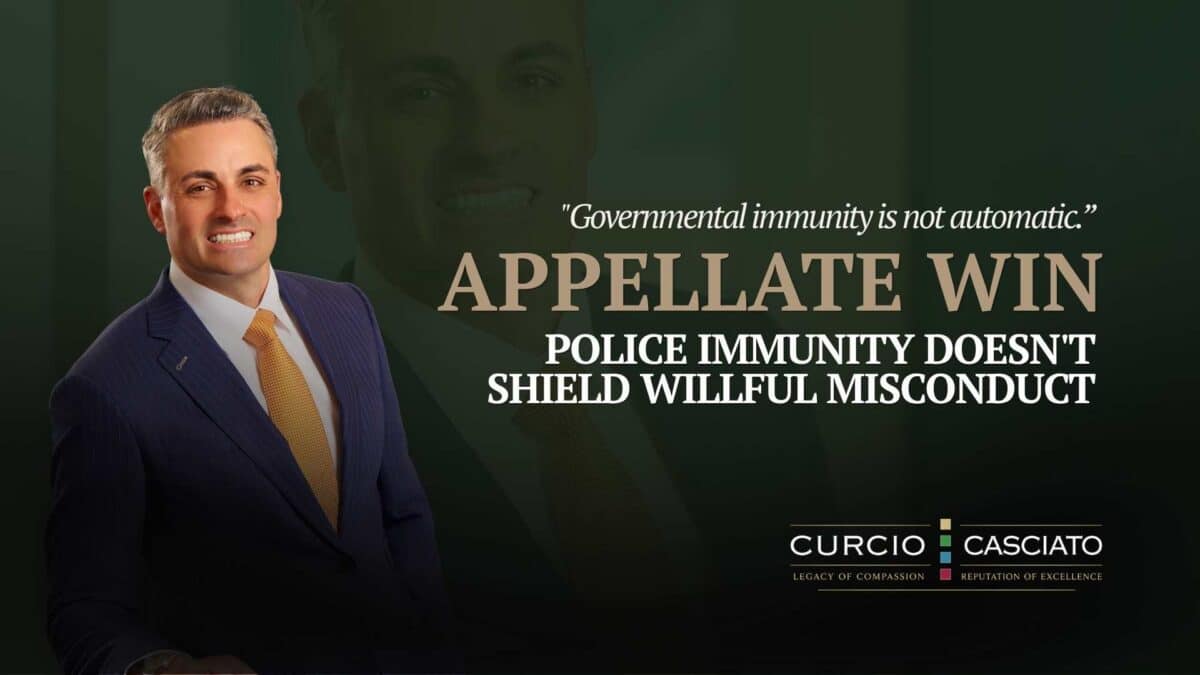
Illinois Appellate Court Revives Lawsuit Against Village of New Lenox, Rejects Summary Judgment Based on Governmental Immunity
CHICAGO, Illinois – The Illinois Appellate Court, Third District, has reversed the dismissal of a lawsuit brought on behalf of Qusai Alkafaween, holding that a jury, not the trial court, must determine whether New Lenox police officers are entitled to governmental immunity after leaving a man experiencing an apparent mental health crisis in an unfamiliar area late at night, where he was later struck by a vehicle.
The published opinion, Alkafaween v. Village of New Lenox, 2026 IL App (3d) 250449, reverses the Will County Circuit Court’s grant of summary judgment in favor of the Village of New Lenox and remands the case for trial proceedings.
According to the appellate court, the evidence creates a genuine issue of material fact regarding whether New Lenox police officers were providing “police protection services,” which carries absolute immunity under Section 4-102 of the Illinois Tort Immunity Act, or whether they were instead executing and enforcing the law, making them subject to liability for willful and wanton conduct under Section 2-202.
The lawsuit alleges officers responded to Silver Cross Hospital after receiving a criminal trespass complaint involving Mr. Alkafaween, who was experiencing an apparent mental health crisis. Rather than transporting him home or to another place of safety, the complaint alleges officers drove him to an unfamiliar commercial area near the Cook-Will County border shortly before midnight, left him there, and instructed him to walk north. Approximately forty-five minutes later, Mr. Alkafaween was struck by a vehicle and suffered severe injuries.
The appellate court found substantial evidence from which a jury could conclude the officers were engaged in law enforcement rather than community caretaking, including that they responded to investigate criminal trespass, prevented Mr. Alkafaween from reentering the hospital, transported him away from the alleged trespass location, and later described their plan as “dumping” him near the county line so he would not return to the hospital.
In reversing the dismissal, the court concluded:
“A reasonable person could find, based upon the fact that the officers chose to ‘dump’ plaintiff—a person who was obviously experiencing mental health issues… in the parking lot of a closed business in an unfamiliar area at nearly midnight… that the officers were not conducting ‘community caretaking.'”
“This decision reinforces an important principle under Illinois law,” said Chicago injury attorney Jack J. Casciato, appellate counsel for the plaintiff. “Governmental immunity is not automatic. When officers are executing and enforcing the law, and there is evidence of willful and wanton conduct, those issues belong before a jury.”
The decision also provides additional guidance regarding the distinction between Sections 2-202 and 4-102 of the Illinois Tort Immunity Act, emphasizing that determining whether officers were enforcing the law or providing police protection ordinarily presents a factual question for the jury when the evidence supports competing conclusions.
The case now returns to the Circuit Court of Will County for further proceedings.
Case Information
Alkafaween v. Village of New Lenox, 2026 IL App (3d) 250449
Counsel for Plaintiff-Appellant
Jack J. Casciato
Curcio & Casciato
Chicago, Illinois